Captive Breeding for Conservation: Fact & Folly
While aviculturists argue that captive breeding will conserve parrot species by preserving the gene pool, the reality is quite the opposite: Domestic or captive rearing of exotic birds for the pet trade contributes nothing to save species in the wild. The vast majority of captive breeding occurs outside of official conservation programs and is not based on natural selection.
Since parrot survival skills and social behavior are determined by generations of evolution and interaction with the flock and the environment and passed on by parents to offspring, the probability of successfully releasing captive bred birds into a species' habitat of origin — assuming that habitat is still intact — is extremely minimal.
The pet industry - either purposefully or unintentionally - selects for physical, physiological, and behavioral traits that maximize profits rather than traits that enable survival in the wild. (2)
What Drives the Captive Bird Trade
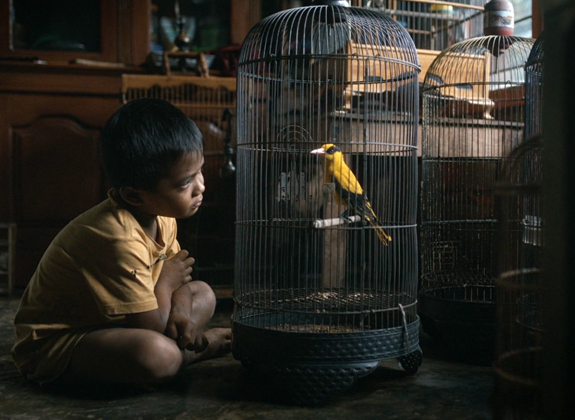
The marketing of captive-bred birds increases the demand for birds as “pets” and, in turn, increases the incentive for legal and illegal trapping of wild birds. Birds are sold to private individuals to keep as “pets,” to dealers and brokers seeking cheap “inventory,” to wealthy collectors looking to obtain rare birds, and to aviculturists seeking genetic diversity for breeding stock. Case in point, the popularity of African Grey parrots has driven the species almost to extinction in the wild, with the country of Ghana losing between 90-99% of its African grey parrot population. (3)
In fact, the presence of captive-bred birds in the trade actually provides a perfect cover for smuggled birds despite U.S. and international trade restrictions, because legally captured birds and captive-bred birds are physically indistinguishable from illegally obtained wild-caught birds.
The growth of online platforms has expanded the availability of exotic animals, thereby further spurring the demand for keeping them as “pets ” and diminishing efforts to educate and encourage the public to keep wild animals in the wild. Add to that, popular culture and the media often portrays parrots and other exotic birds as easy-to-care for “pets,” or entertainers that can be trained to talk and do tricks, completely distorting the public’s perception of the true nature of birds.
Cruelty on a Grand Scale
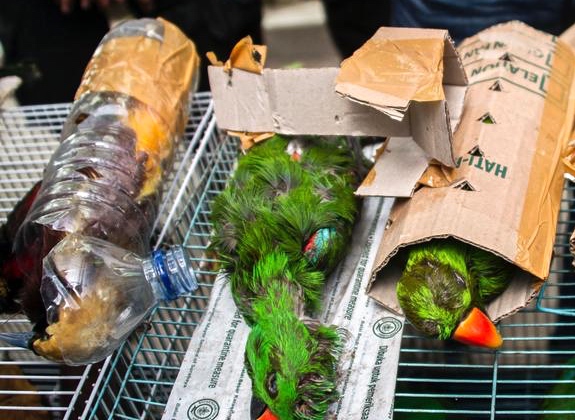
Methods used to lure and trap wild parrots often ensnare non-target birds, adding to the decimation of songbirds, insects, other animals necessary to the biodiversity of habitats. Many birds die while in possession of a trapper or in transit.
Nicaraguan researchers estimate that, in order to compensate for mortalities, up to four times as many parrots are captured than make it to market (4). Research shows that mortality rates from poaching are significantly greater than mortality due to natural causes. (5)
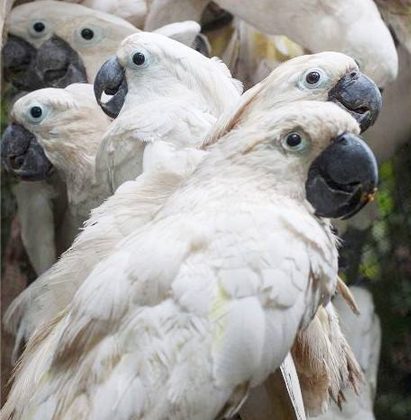
Once in captivity, birds are subject to substandard care conditions, particularly at mass breeding facilities, where stress and overcrowding are a known factor in the rapid spread of disease.
The Bottom Line
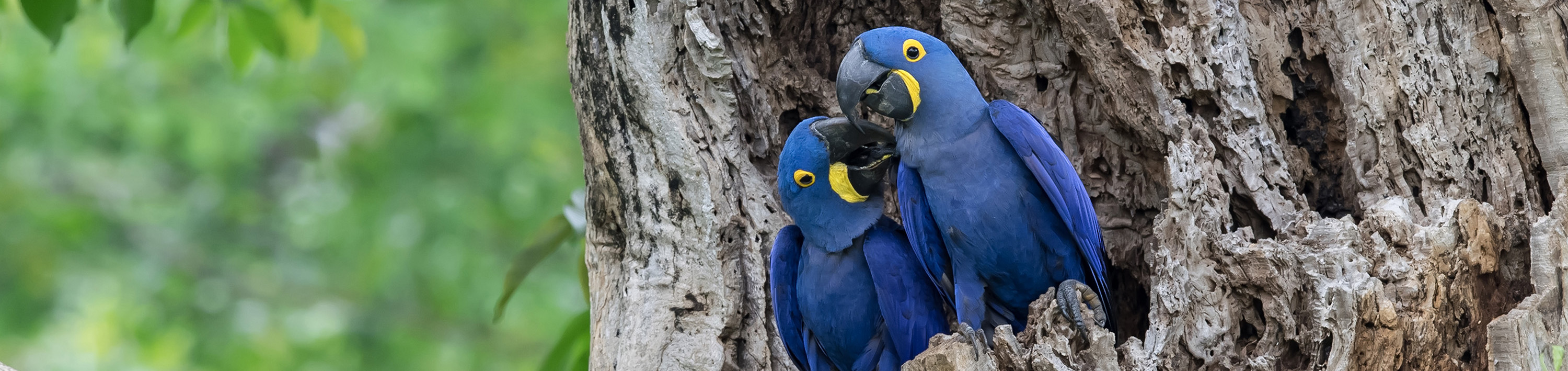
Breeding for the pet industry in no way 'conserves' an endangered species because it fails to deliver on the most critical ingredients needed. AWC fully supports scientifically based, bona fide parrot conservation programs intended to preserve and restore birds in their natural habitats.
citations:
-
Ribeiro, J. et al.(2019) Trends in legal and illegal trade of wild birds: A global assessment based on expert knowledge. Biodivers. Conserv. 2019, 28, 3343–3369.
-
Bradshaw G.A. and Engebretson. M (2013). Parrot Breeding and Keeping: The Impact of Capture and Captivity. Policy Paper. Animals and Society Institute.
-
Annorbah, N.N.D. et al (2016), Trade and habitat change virtually eliminate the Grey Parrot Psittacus erithacus from Ghana. Ibis, 158: 82-91.
-
Wright, T.F. et al. Nest Poaching in neotropical parrots. Conservation Biology, 15:710-720
-
Michels,A.(2002) Parrot Smuggling Still a Global Problem.- Animal Welfare Institute Quarterly. 51:3.
Resources:
Broken Wings – A Report on The South East Asia Wild Bird Trade by Thrive Conservation
https://thriveconservation.org/wp-content/uploads/2023/05/Broken-Wings-Report-2023_FINAL.pdf
Captive Breeding of Exotic Birds
by Monica Engebretson
Organizations Working to Protect and Restore Birds in the Wild
One Earth Conservation: https://www.oneearthconservation.org/
Hatched to Fly Free: https://www.fosterparrots.com/hatched-to-fly-free
Thrive Conservation: https://thriveconservation.org/
World Parrot Trust – Conservation Reference Library
Bird Life International